31 Dec 2021
Tariff Change for Gypsum in United States
The United States set the tariff status for gypsum to free as of December 31 2021, removing duties and potentially boosting imports and exports.
Commodity
Gypsum is a common mineral found in various forms of sedimentary rocks and is produced through the evaporation of seawater or lagooons. It is composed of calcium sulfate dihydrate (CaSO4•2H2O) and is often found in large crystalline structures that can form striking, dramatic landscapes, such as the White Sands National Park in New Mexico. Gypsum has a wide range of uses, with the majority being in the construction...
Gypsum is a common mineral found in various forms of sedimentary rocks and is produced through the evaporation of seawater or lagooons. It is composed of calcium sulfate dihydrate (CaSO4•2H2O) and is often found in large crystalline structures that can form striking, dramatic landscapes, such as the White Sands National Park in New Mexico.
Gypsum has a wide range of uses, with the majority being in the construction industry. It is a key ingredient in various construction materials, including drywall, plaster, and cement. Additionally, it is used in the agricultural sector as a soil amendment to improve the structure and fertility of the soil.
Gypsum is produced through both natural and synthetic means. Naturally occurring gypsum is mined from the ground and then processed to remove any impurities. Synthetic gypsum, on the other hand, is produced as a byproduct of various industrial processes, such as the desulfurization of flue gases in coal-fired power plants. This byproduct is then converted into marketable gypsum products, providing a sustainable and environmentally friendly alternative to natural gypsum.
 Production
Mined Gypsum
Production
Mined Gypsum
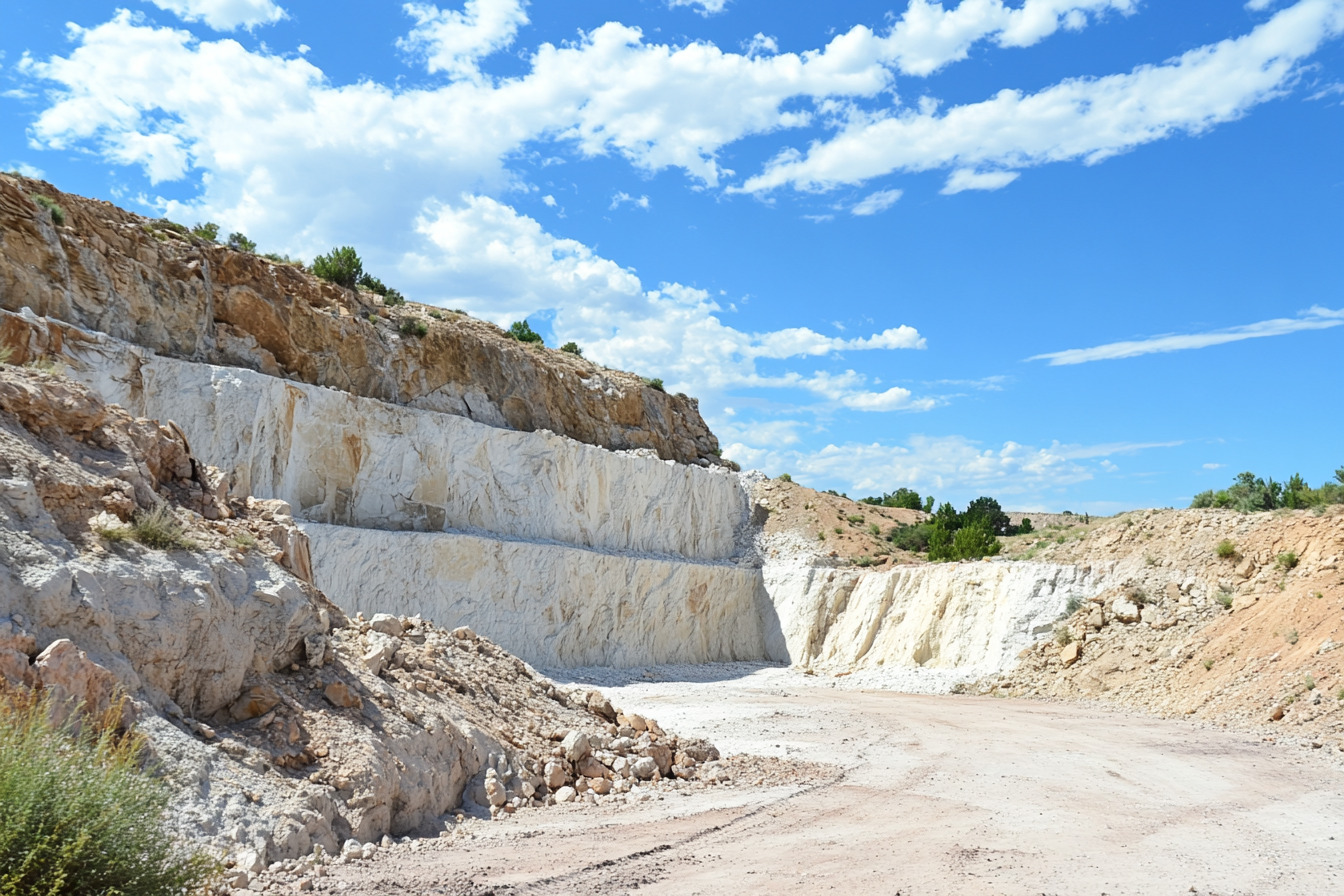
Gypsum is a sedimentary rock mineral composed of calcium sulfate dihydrate that is primarily used in construction as a key component in producing plaster, wallboard, and cement.
Gypsum is a sedimentary rock mineral composed of calcium sulfate dihydrate that is primarily used in construction as a key component in producing plaster, wallboard, and cement.
Trade
Gypsum Anhydrite
Gypsum, often traded as "anhydrite," is a valuable mineral used in construction, agriculture, and industry for products like drywall, plaster, cement, fertilizers, diapers, concrete, and as a soil conditioner due to its...
Gypsum, often traded as "anhydrite," is a valuable mineral used in construction, agriculture, and industry for products like drywall, plaster, cement, fertilizers, diapers, concrete, and as a soil conditioner due to its ability to retain water.
Market intelligence
The United States set the tariff status for gypsum to free as of December 31 2021, removing duties and potentially boosting imports and exports.
The sale of the Boral Gypsum joint venture was finalized, changing ownership of the Australian gypsum processing operation.
Boral Ltd. announced a reserve adjustment that reduced reported gypsum reserves in India.
Boral Ltd. experienced a temporary port closure in India, disrupting the supply of gypsum to the Australian market.
The Chinese Drywall Settlement Program continued to disburse payments to homeowners through Nov. 9, 2018.
Red Moon Resources began mining operations at the Ace gypsum mine in western Newfoundland.
The Naica Mine in Chihuahua revealed 12‑meter gypsum crystals, the largest ever discovered.
Knauf Group agreed to acquire USG Corp. for $7 billion, creating one of the largest wallboard manufacturers in the world.
The Boral Gypsum joint venture was placed under review following Knauf’s acquisition of USG, potentially delaying future operations.
Knauf Plasterboard announced a new gypsum wallboard plant to open in 2017 in Bundaberg, Queensland, expanding production capacity.
The Chinese Drywall Settlement Program extended payments to affected homeowners through March 22, 2016.
China banned clay brick production in many municipalities, shifting construction materials toward gypsum wallboard and increasing demand for gypsum.
No events match the selected year.