31 Dec 2021
Tariff Change for Gypsum in United States
The United States set the tariff status for gypsum to free as of December 31 2021, removing duties and potentially boosting imports and exports.
Gypsum production
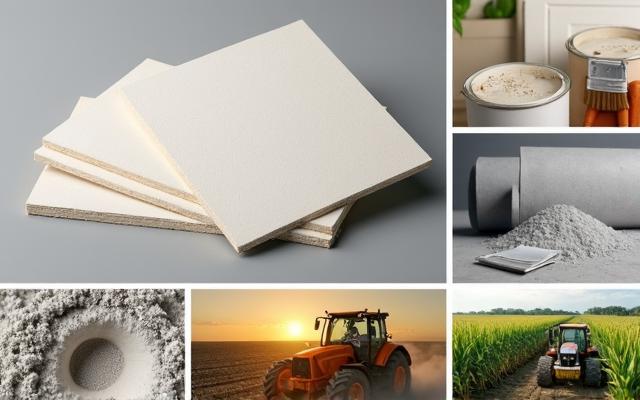
Gypsum is a mineral commodity that originates from sedimentary rock formations formed through the evaporation of ancient lakes and seawater. It is composed of calcium sulfate dihydrate (CaSO4·2H2O) and can range in color from white to gray or light brown. Mined gypsum has numerous applications, primarily in construction. It is used as a key component in producing plaster, wallboard, and cement. Additionally, it serves as a soil amendment to improve soil structure and provide essential nutrients for crops. Gypsum a...
Gypsum is a mineral commodity that originates from sedimentary rock formations formed through the evaporation of ancient lakes and seawater. It is composed of calcium sulfate dihydrate (CaSO4·2H2O) and can range in color from white to gray or light brown.
Mined gypsum has numerous applications, primarily in construction. It is used as a key component in producing plaster, wallboard, and cement. Additionally, it serves as a soil amendment to improve soil structure and provide essential nutrients for crops. Gypsum also plays a role in the manufacturing of tofu, fertilizers, and various industrial products.
The production process involves extracting gypsum from open-pit or underground mines, followed by crushing, grinding, and separation to remove impurities. The resulting gypsum is dried and packaged for distribution to industries for further processing and utilization.
Country production pages
 Afghanistan
 Albania
 Algeria
 Angola
 Argentina
 Armenia
 Australia
 Austria
 Azerbaijan
 Belarus
 Bhutan
 Bolivia
 Bosnia and Herzegovina
 Brazil
 Bulgaria
 Canada
 Chile
Chile
 China
China
 Colombia
 Croatia
 Cuba
Cuba
 Cyprus
 Czech Republic
 Dominican Republic
 Ecuador
 Egypt
Egypt
 El Salvador
 Eritrea
 Ethiopia
 France
 Georgia
 Germany
 Greece
 Guatemala
 Honduras
 Hungary
 India
India
 Indonesia
 Iran
Iran
 Iraq
Iraq
 Ireland
 Israel
 Italy
Italy
 Jamaica
 Japan
Japan
 Jordan
 Kazakhstan
 Kenya
Kenya
 Kyrgyz Republic
 Laos
Laos
 Latvia
 Lebanon
 Libya
Libya
 Mali
Mali
 Mauritania
 Mexico
 Moldova
 Mongolia
 Morocco
 Myanmar
 Namibia
 Nicaragua
 Niger
Niger
 Nigeria
 North Macedonia
 Oman
Oman
 Pakistan
 Paraguay
 Peru
Peru
 Poland
 Portugal
 Qatar
Qatar
 Romania
 Russia
 Saudi Arabia
 Serbia
 Sierra Leone
 Slovakia
 Slovenia
 Somalia
 South Africa
 Spain
Spain
 Sri Lanka
 Sudan
Sudan
 Switzerland
 Syria
Syria
 Taiwan
 Tajikistan
 Tanzania
 Thailand
 Tunisia
 Turkey
 Turkmenistan
 Ukraine
 United Arab Emirates
 United Kingdom
 United States
 Uruguay
 Uzbekistan
 Venezuela
 Yemen
Yemen
 Zambia
Market intelligence
The United States set the tariff status for gypsum to free as of December 31 2021, removing duties and potentially boosting imports and exports.
The sale of the Boral Gypsum joint venture was finalized, changing ownership of the Australian gypsum processing operation.
Boral Ltd. announced a reserve adjustment that reduced reported gypsum reserves in India.
Boral Ltd. experienced a temporary port closure in India, disrupting the supply of gypsum to the Australian market.
The Chinese Drywall Settlement Program continued to disburse payments to homeowners through Nov. 9, 2018.
Red Moon Resources began mining operations at the Ace gypsum mine in western Newfoundland.
The Naica Mine in Chihuahua revealed 12‑meter gypsum crystals, the largest ever discovered.
Knauf Group agreed to acquire USG Corp. for $7 billion, creating one of the largest wallboard manufacturers in the world.
The Boral Gypsum joint venture was placed under review following Knauf’s acquisition of USG, potentially delaying future operations.
Knauf Plasterboard announced a new gypsum wallboard plant to open in 2017 in Bundaberg, Queensland, expanding production capacity.
The Chinese Drywall Settlement Program extended payments to affected homeowners through March 22, 2016.
China banned clay brick production in many municipalities, shifting construction materials toward gypsum wallboard and increasing demand for gypsum.
Class‑action settlement resolved claims from owners of ~20,000 homes built with corrosive drywall from China, reducing liability and influencing the drywall market.
Settlement of the class‑action lawsuit over corrosive drywall imported from China was reached, covering claims through Oct. 25, 2013.
Massachusetts banned the disposal of clean wallboard in landfills, tightening waste regulations for gypsum products.
Massachusetts banned the disposal of clean wallboard from state waste facilities, tightening waste management and encouraging recycling.
United States removed tariff on gypsum anhydrite, making it duty-free and potentially increasing imports.
Several gypsum mines have closed due to the growing availability of synthetic gypsum from coal‑fired powerplants.
Over 2,000 homeowner complaints were filed with the U.S. Consumer Product Safety Commission in 2009 regarding corrosive drywall imported from China, raising safety concerns.
More than 600 metric tons of Chinese drywall were imported into the United States in 2009, representing a small fraction of total imports.
Construction of new wallboard production facilities adjacent to coal-fired electric powerplants, expanding gypsum processing capacity and reducing transportation costs.
Installation of new scrubbers at coal‑fired powerplants, increasing synthetic gypsum production and shifting supply away from mined gypsum.
Reserve base estimates for gypsum were discontinued in 2009, altering how reserves are reported worldwide.
A depletion allowance of 14% was applied to domestic and foreign gypsum inventories in 2009, affecting supply accounting.
No events match the selected year.