Ferroalloys production
Ferroalloys
Ferroalloys are metal alloys primarily consisting of iron and one or more other elements like chromium, manganese, silicon, or nickel. They're produced by smelting oxidic ores or ferrous scrap in a furnace, reducing the oxides to their elemental form while producing iron oxide (slag). Ferroalloys enhance the properties of specialty steels like stainless steel, improving strength, hardness, and corrosion resistance. The production process for ferroalloys dates back to ancient times when blacksmiths discovered that a...
Ferroalloys are metal alloys primarily consisting of iron and one or more other elements like chromium, manganese, silicon, or nickel. They're produced by smelting oxidic ores or ferrous scrap in a furnace, reducing the oxides to their elemental form while producing iron oxide (slag). Ferroalloys enhance the properties of specialty steels like stainless steel, improving strength, hardness, and corrosion resistance.
The production process for ferroalloys dates back to ancient times when blacksmiths discovered that adding small amounts of certain elements improved iron's properties. However, it wasn't until the 18th and 19th centuries that the industrial production of ferroalloys began with modern smelting techniques. Today, South Africa, China, and India are the largest producers.
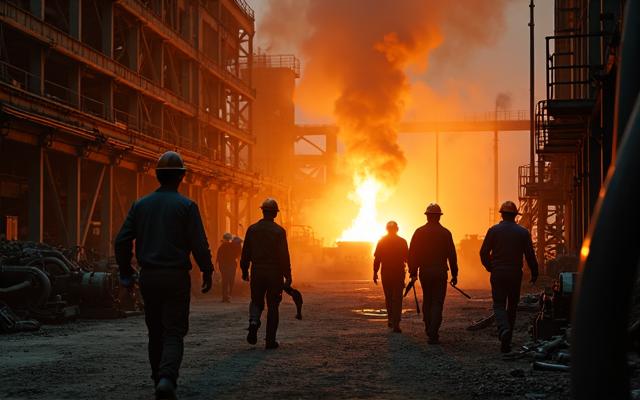
Ferroalloys are used to produce various types of steel by imparting specific properties like hardness, strength, and corrosion resistance. They're also used for deoxidizing and desulfurizing liquid iron and steel during the smelting process, and in niche applications such as superalloy production, electroplating, and the chemical and foundry industries. The production process involves smelting a mixture of raw materials at high temperatures (over 1500°C) to produce ferroalloys.
Global Production History
Global Production Map
Production by Country
Country production pages
Countries Producing Ferroalloys
 Albania
 Argentina
 Armenia
 Australia
 Austria
 Bahrain
 Bhutan
 Bosnia and Herzegovina
 Brazil
 Bulgaria
 Canada
 Chile
Chile
 China
China
 Colombia
 Croatia
 Czech Republic
 Dominican Republic
 Egypt
Egypt
 Finland
 France
 Gabon
Gabon
 Georgia
 Germany
 Greece
 Guatemala
 Hungary
 Iceland
 India
India
 Indonesia
 Iran
Iran
 Italy
Italy
 Japan
Japan
 Kazakhstan
 Kosovo
 Laos
Laos
 Malaysia
 Mexico
 Myanmar
 New Caledonia
 North Korea
 North Macedonia
 Norway
 Oman
Oman
 Paraguay
 Peru
Peru
 Poland
 Romania
 Russia
 Saudi Arabia
 Slovakia
 Slovenia
 South Africa
 South Korea
 Spain
Spain
 Sweden
 Taiwan
 Thailand
 Turkey
 Ukraine
 United States
 Uruguay
 Uzbekistan
 Venezuela
 Zimbabwe