Commodity
Garnet
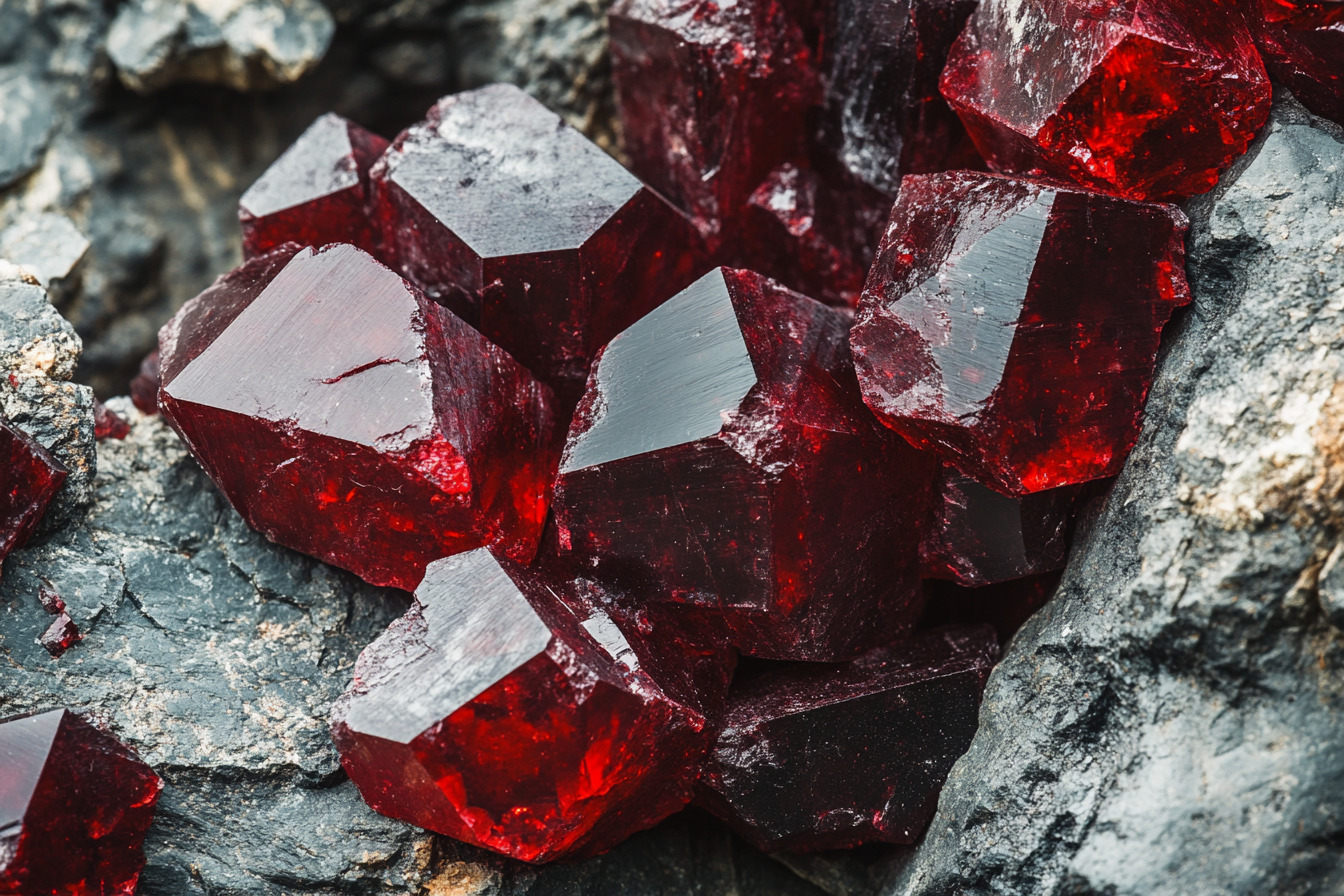
Garnet is a widely-occurring mineral found in metamorphic, igneous, and sedimentary rocks. Its name is derived from the Latin word "granatum," which means pomegranate, due to the similarity of its red color to the seeds of the fruit. Garnets occur in a variety of colors, including red, green, yellow, orange, brown, and black, depending on their chemical composition. The primary use of garnets is in the gemstone indus...
Garnet is a widely-occurring mineral found in metamorphic, igneous, and sedimentary rocks. Its name is derived from the Latin word "granatum," which means pomegranate, due to the similarity of its red color to the seeds of the fruit. Garnets occur in a variety of colors, including red, green, yellow, orange, brown, and black, depending on their chemical composition.
The primary use of garnets is in the gemstone industry, where they are cut and polished for jewelry and ornamental purposes. The red garnets, known as almandine and pyrope, are the most commonly used gems. The green garnets, including tsavorite and demantoid, are also highly sought after. Garnets are also used in the abrasive industry, where they are crushed and graded for use in sandpaper, waterjet cutting, and other applications.
Garnets are produced through the crystallization of minerals under high pressure and temperature conditions, often in the Earth's mantle. They can also form during the metamorphism of rocks, when existing minerals are transformed into new ones under intense heat and pressure. Garnets can also be found in alluvial deposits, where they have been eroded from their original rock source and transported by rivers and streams.
 Production
Garnet
Production
Garnet
Garnet is a dark, opaque mineral with a hardness of 7.5 on the Mohs scale, primarily used as an abrasive or gemstone.
Garnet is a dark, opaque mineral with a hardness of 7.5 on the Mohs scale, primarily used as an abrasive or gemstone.