Apr 2024
Ownership Change for Diatomite in France
A France‑based industrial minerals company entered negotiations to acquire three European diatomite and perlite assets in France and Italy, with completion expected by the end of 2024.
Commodity
Diatomite, also known as diatomaceous earth, is a soft, chalk-like, sedimentary rock that is easily crumbled into a fine white to off-white powder. It is primarily composed of the fossilized remains of diatoms, a type of hard-shelled algae that have been accumulating in fresh and marine water environments for millions of years. Diatomite is light in weight and has a high porosity, making it an excellent filtering and...
Diatomite, also known as diatomaceous earth, is a soft, chalk-like, sedimentary rock that is easily crumbled into a fine white to off-white powder. It is primarily composed of the fossilized remains of diatoms, a type of hard-shelled algae that have been accumulating in fresh and marine water environments for millions of years. Diatomite is light in weight and has a high porosity, making it an excellent filtering and absorptive material.
Diatomite has a wide range of uses, such as filtration in swimming pools, wine, beer and sugar production, chemical and pharmaceutical processing, and in agriculture as an insecticide and soil amendment. It is also used in cat litter, paints, and dynamite.
Diatomite is produced by the mining of diatomite deposits, which are found in the form of loose sediment or as solid rock. The mining process can be done through open pit or underground methods. Once the diatomite is extracted, it is then crushed, dried, and milled into a fine powder. The purity and quality of the diatomite depend on the type of diatoms present in the deposit and the environmental conditions in which they were formed.
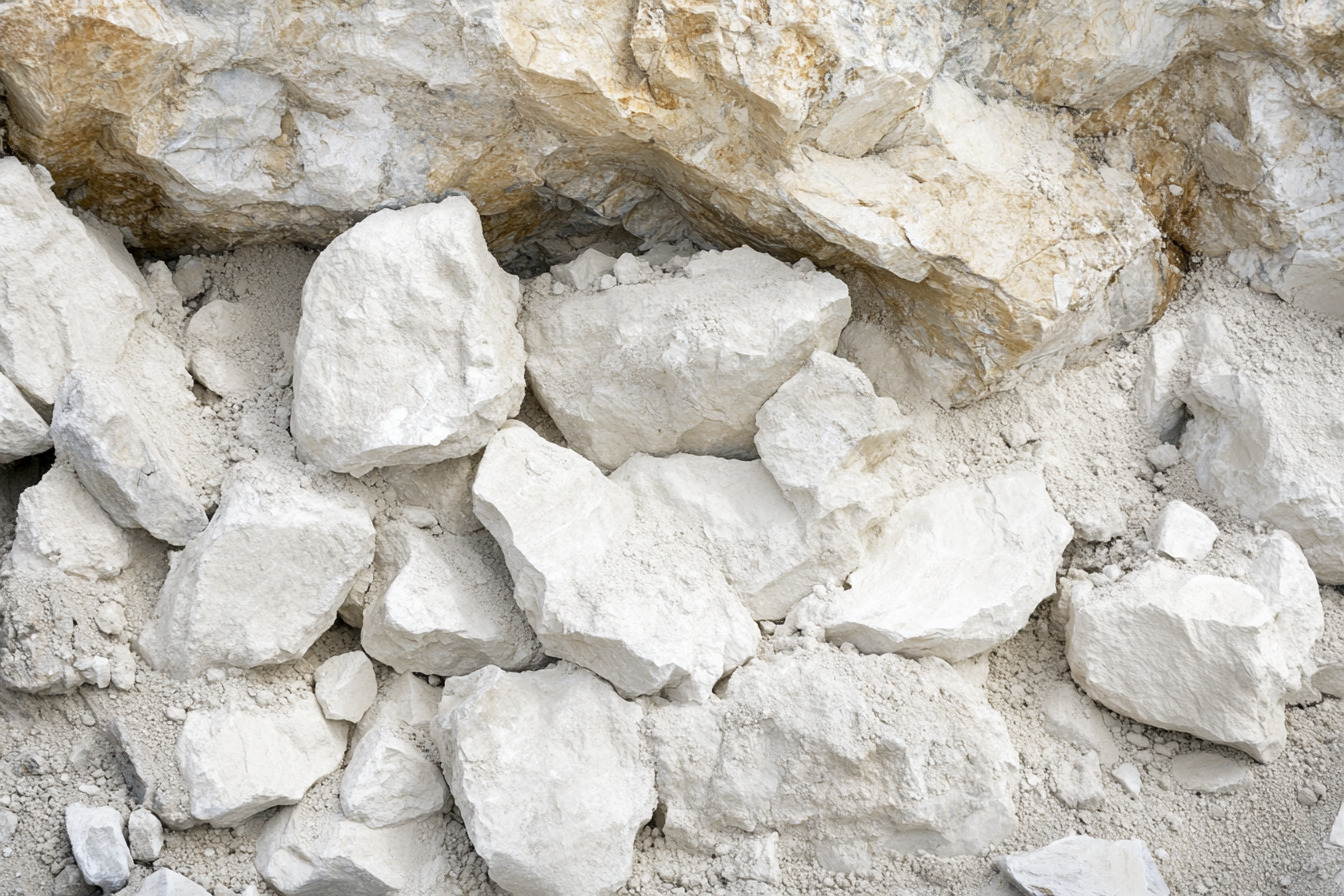
 Production
Diatomite
Production
Diatomite
Diatomite is a soft, sedimentary rock composed primarily of fossilized diatoms, which is often crumbled into a fine powder used for filtration, insulation, abrasives, and other purposes due to its porous structure and si...
Diatomite is a soft, sedimentary rock composed primarily of fossilized diatoms, which is often crumbled into a fine powder used for filtration, insulation, abrasives, and other purposes due to its porous structure and silica-based cell wall.
Trade
Siliceous Earths
Diatomite is a natural, soft, and finely porous sedimentary rock made from fossilized diatoms that is used as a filter aid, filler, extender, and in various industrial processes due to its high porosity and surface area.
Diatomite is a natural, soft, and finely porous sedimentary rock made from fossilized diatoms that is used as a filter aid, filler, extender, and in various industrial processes due to its high porosity and surface area.
Market intelligence
A France‑based industrial minerals company entered negotiations to acquire three European diatomite and perlite assets in France and Italy, with completion expected by the end of 2024.
China’s diatomite reserves were revised upward based on recent government reports.
France’s diatomite reserves were revised upward based on recent government reports.
The Republic of Korea’s diatomite reserves were revised upward based on recent government reports.
The U.S. classified diatomite under HS 12–31–13 with zero tariff, removing trade barriers and potentially boosting U.S. exports.
Ongoing U.S. regulatory dispute over the classification of diatomite and related absorbent products as free of free‑crystalline silica, potentially impacting product labeling, market access, and export regulations.
Ongoing legal disputes over the classification of diatomite and related absorbent products as free of free‑crystalline silica remain contentious and unresolved, potentially affecting regulatory compliance and market access.
The 2009 global economic downturn caused a 25% decline in U.S. diatomite production, reducing output from 764,000 t in 2008 to 575,000 t in 2009, materially impacting supply and market dynamics.
Imerys Minerals Ltd. announced possible temporary closures of all U.S. filtration mineral operations in early 2009 due to decreased demand, potentially reducing near‑term diatomite production.
A 14% depletion allowance was applied to domestic and foreign diatomite, altering cost structures for producers and importers in 2005.
U.S. customs reclassified diatomite under tariff code 2512.00.0000 as duty‑free effective December 31, 2005, eliminating import duties and potentially increasing trade flows.
Closure and reclamation of one diatomite mining operation in the United States.
No events match the selected year.