31 Dec 2019
Processing Expansion for Bromine in Jordan
Jordan Bromine Co. Ltd. completed a $50 million expansion project, increasing its bromine production capacity to 150,000 t from 100,000 t in 2018.
Commodity
Bromine is a volatile, reddish-brown liquid at room temperature that evaporates easily into a red-brown gas with a strong, chlorine-like odor. It is the third-lightest halogen and elemental bromine is largely obtained from natural sources such as brine pools. It is mainly produced in the United States, Israel, and China. Bromine's primary use is as a chemical intermediate in the manufacture of other products, such as...
Bromine is a volatile, reddish-brown liquid at room temperature that evaporates easily into a red-brown gas with a strong, chlorine-like odor. It is the third-lightest halogen and elemental bromine is largely obtained from natural sources such as brine pools. It is mainly produced in the United States, Israel, and China.
Bromine's primary use is as a chemical intermediate in the manufacture of other products, such as agricultural chemicals, biocides, flame retardants, dyestuffs, insecticides, pharmaceuticals, and chemical intermediates. Small amounts of bromine are used in chemical analyses, in the production of Quaternary ammonium compounds, and as a disinfectant in swimming pools.
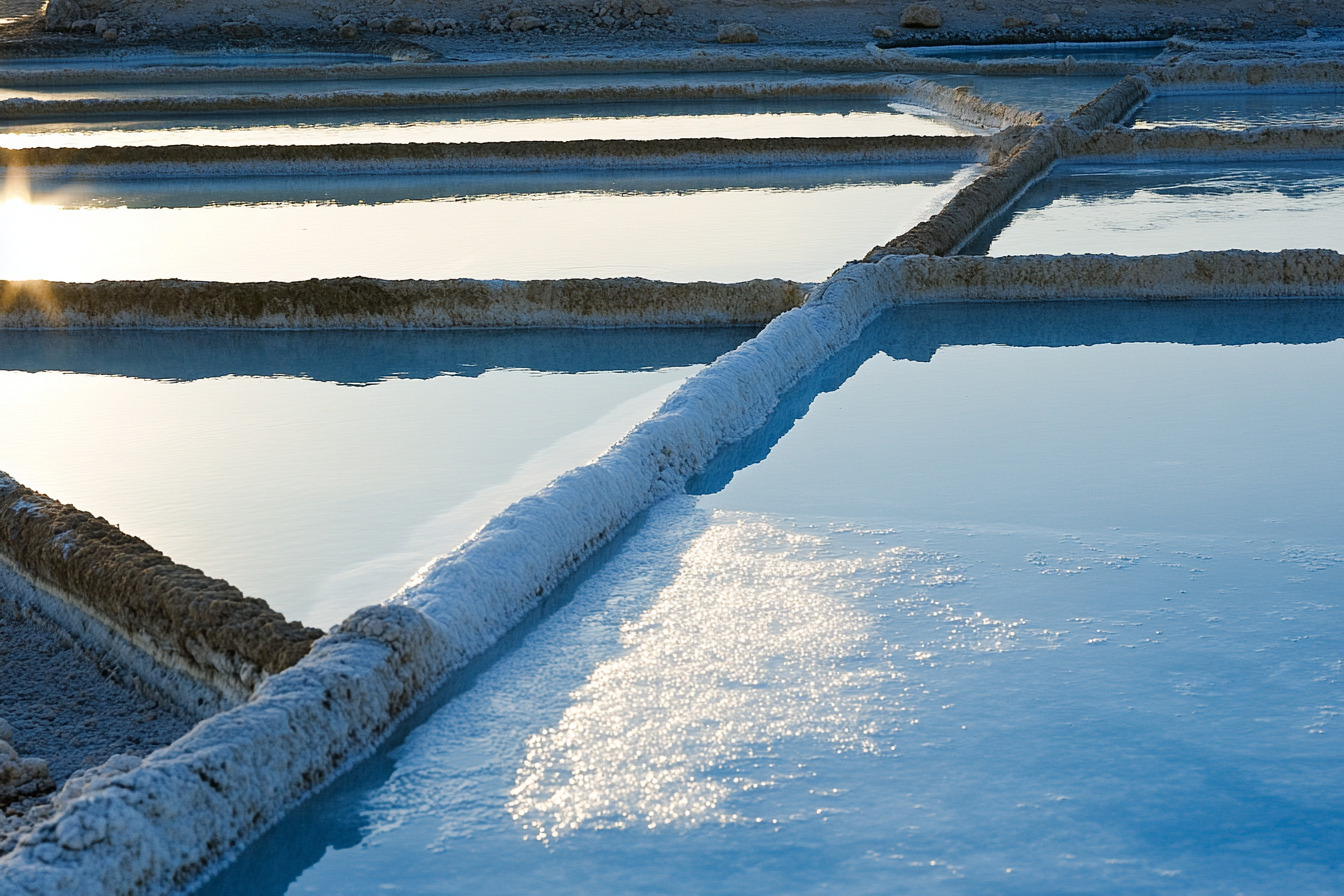
Bromine is produced industrially by the treatment of brine with chlorine gas. This converts bromide ions to bromine, which can then be removed. The bromine is then purified by steam distillation, where it is steam heated to produce bromine gas, which is then condensed into liquid bromine. This liquid bromine is then further processed, dried, and packaged for distribution.
 Production
Produced Bromine
Production
Produced Bromine
Bromine is a reddish-brown liquid at room temperature that is produced industrially through the reaction of chlorine gas with seawater or brine and has various uses as a chemical intermediate in flame retardants, sedativ...
Bromine is a reddish-brown liquid at room temperature that is produced industrially through the reaction of chlorine gas with seawater or brine and has various uses as a chemical intermediate in flame retardants, sedatives, and other products.
Trade
Bromine Compounds
Bromine is a reddish-brown liquid at room temperature that evaporates easily into a corrosive gas and is primarily produced through extraction of brine followed by purification steps.
Bromine is a reddish-brown liquid at room temperature that evaporates easily into a corrosive gas and is primarily produced through extraction of brine followed by purification steps.
Trade
Bromides
Bromine and its compounds, including sodium and potassium bromides, are naturally occurring halogen elements used in various applications such as agricultural chemicals, medicine, photography, and pharmaceuticals.
Bromine and its compounds, including sodium and potassium bromides, are naturally occurring halogen elements used in various applications such as agricultural chemicals, medicine, photography, and pharmaceuticals.
Trade
Fluorine, Bromine
Bromine is a volatile, reddish-brown liquid with a pungent smell that evaporates easily into a red-brown gas used in various industrial applications including fire retardants, pharmaceuticals, water treatment, and agricu...
Bromine is a volatile, reddish-brown liquid with a pungent smell that evaporates easily into a red-brown gas used in various industrial applications including fire retardants, pharmaceuticals, water treatment, and agricultural products.
Market intelligence
Jordan Bromine Co. Ltd. completed a $50 million expansion project, increasing its bromine production capacity to 150,000 t from 100,000 t in 2018.
The International Trade Administration determined in November 2019 that magnesium from Israel was sold in the United States at less than fair value, leading to reduced magnesium—and consequently bromine—production by Israel Chemicals Ltd.
The International Trade Administration concluded an investigation (Oct 1 2017‑Sep 30 2018) into magnesium from Israel being sold at less than fair value, affecting downstream bromine production.
The Chinese government shut down many chemical production facilities, including bromine plants, to comply with new safety and environmental regulations.
Gulf Resources, Inc. received a local government notice that three of its bromine facilities would not be allowed to resume production, resulting in permanent closures.
The U.S. EPA ceased approving critical‑use exemptions for methyl bromide, reinforcing the Montreal Protocol ban and limiting its commercial use.
Mexico is exempt from the global methyl bromide phase‑out until 2015, allowing continued use of methyl bromide‑treated crops.
ICL postponed layoffs of 144 employees, indicating workforce adjustments amid regulatory uncertainty.
ICL froze a $1 billion investment program in response to the surtax, delaying planned capital projects.
Israel's Sheshinski II Committee recommended a progressive surtax on natural resource profits, potentially limiting bromine sector investment.
Albemarle and ICL joint venture opened a 10,000‑t/yr bromine processing plant in Israel, expanding production capacity.
EPA released final report recommending alternatives to HBCD, influencing bromine use in flame retardants.
No events match the selected year.